When a brand tests a sample custom mat on the office floor and reports that it feels “a little slippery,” the instinct is to blame the print or the thickness. Usually neither is the culprit. Grip on a yoga mat is decided by the surface material and how it handles moisture, and the surface you end up with is tied directly to the kind of printing you asked for. Understanding that link is the difference between a mat your customers love and a pile of avoidable returns.
Grip is a surface story, not a thickness story
Thickness changes cushioning and stability; it does almost nothing for traction. What your hands and feet actually grab is the top few fractions of a millimeter — the coating or facing bonded to the mat — and those surfaces fall into a few families that behave very differently. The single most important distinction is whether the surface is closed-cell or open-cell, because that determines where a practitioner’s sweat goes.
Open-cell versus closed-cell: follow the sweat
A closed-cell surface, which describes most PVC and many TPE mats, is non-porous. Moisture cannot soak in, so sweat pools on top and the surface gets slick precisely when a practitioner needs grip most. The upside is real: closed-cell mats wipe clean with a damp cloth, resist bacteria, tend to be lighter, and last well. An open-cell surface, the classic example being uncoated natural rubber, is porous. It pulls moisture off the surface and into the material, so the mat actually grips better as things get sweaty. The trade-offs are that these mats are heavier, should not be soaked or drowned in cleaner because the water cannot easily escape, and generally ask for more careful upkeep.
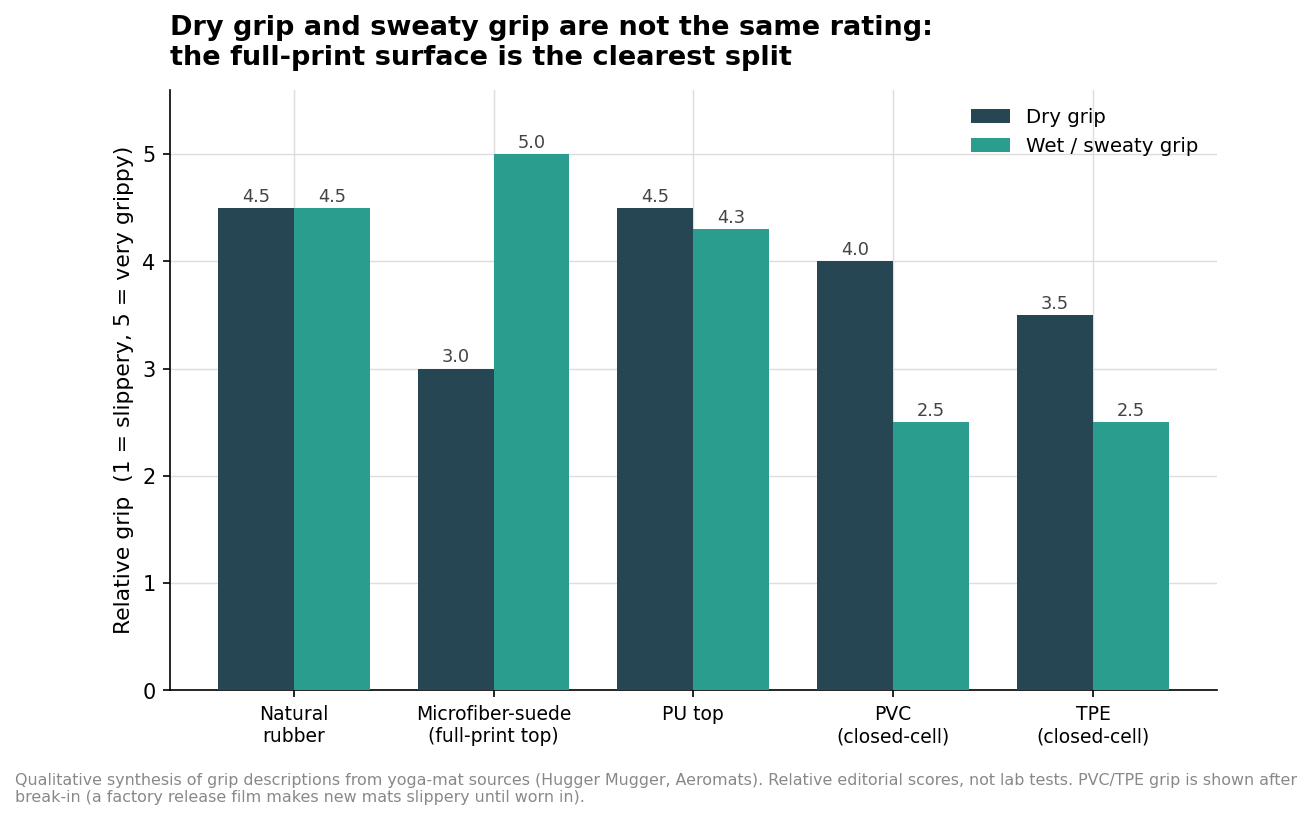
Read the chart as two separate questions rather than one grip score. A closed-cell PVC mat can feel excellent in a dry living room and turn treacherous in a heated class, while natural rubber holds a strong grip across the range. There is no single “grippiest” surface — only the right surface for the conditions the mat will meet.
TPE deserves a mention here because it sits between the extremes and is often marketed on its lighter environmental footprint. Most TPE mats behave as closed-cell surfaces, so they share PVC’s wipe-clean convenience and its tendency to slick up under heavy sweat, while typically weighing less and avoiding the PVC and phthalate chemistry that some buyers screen out. For a general studio or retail line practiced in a room-temperature setting, a closed-cell mat is a sensible, hygienic default. The moment the intended use is hot yoga or a demographic of heavy sweaters, the calculus flips toward natural rubber or a moisture-activated suede top, because that is exactly where closed-cell traction falls apart. Deciding the practice environment before the material is the shortcut that prevents most grip complaints.
The catch with full-color printing
Here is the part that trips up first-time buyers. If you want edge-to-edge, photographic artwork — the vivid all-over designs that make custom mats sell — that look is produced by dye sublimation, and sublimation needs a polyester microfiber “suede” top bonded to a base, usually natural rubber. In other words, choosing a bold full-bleed print often means choosing the suede surface almost by default. Suede tops are moisture-activated: their dry grip is only moderate, but traction climbs as they pick up sweat or a light mist, which is why they shine in hot yoga and can feel oddly slick on a bone-dry floor.
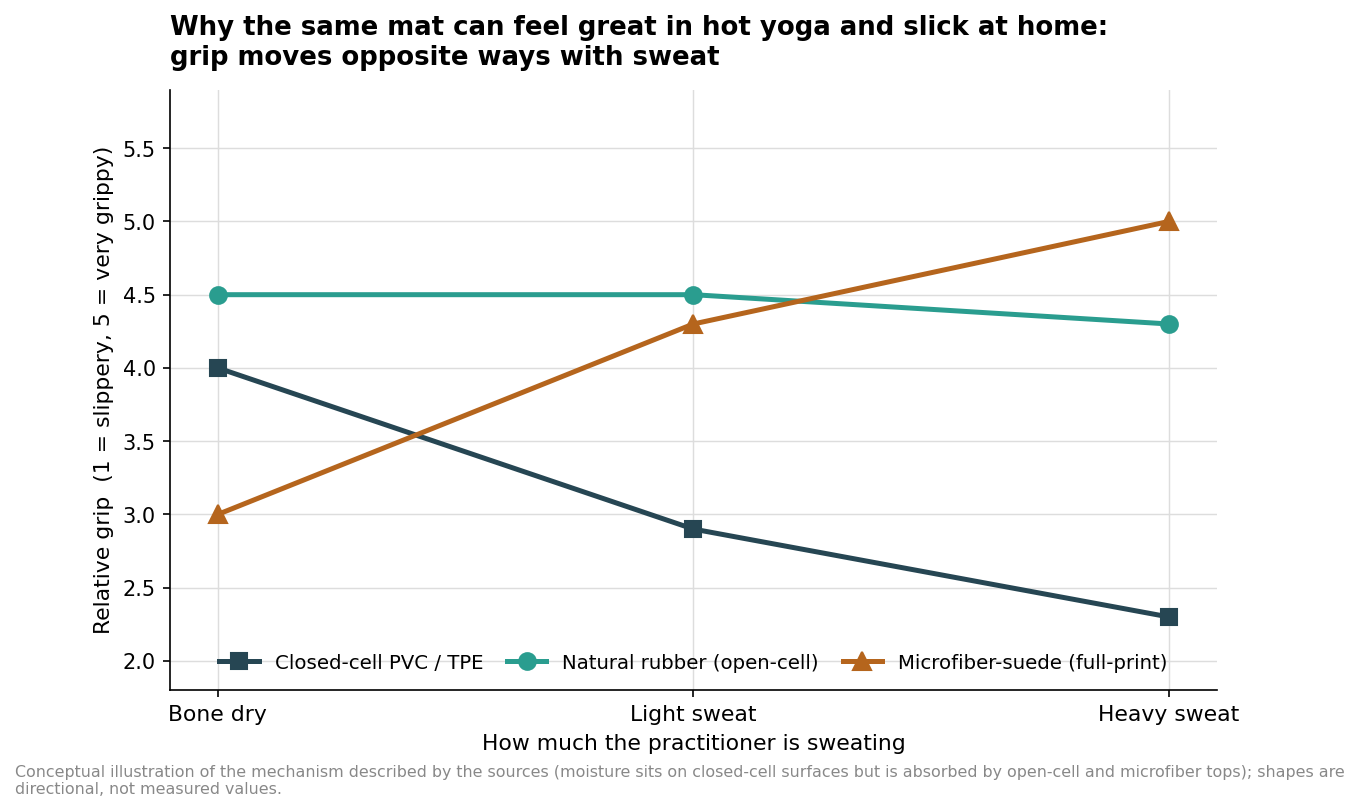
That single behavior explains most of the confused feedback on printed mats. The sample felt slippery in the office because it was bone dry, not because it was defective. The practical fix is worth putting right in your product copy: a suede-top mat is designed to be lightly spritzed with water before practice, and it reaches full grip once the session warms up. Set that expectation and the “it’s slippery” complaints largely disappear.
When you don’t need all-over print
If your design is a solid color with a logo rather than a full photographic wrap, you have more surface freedom. Natural rubber with a screen-printed mark gives you strong dry and wet grip and a premium, tacky feel; just weigh the extra weight and the fact that rubber carries a latex note that matters for the occasional allergy-sensitive customer. A polyurethane (PU) top over a rubber base is the high-end option many serious practitioners prize: it absorbs a little moisture, grips beautifully, and feels natural underfoot, though it is typically offered in solid colors with a printed or etched logo rather than full sublimation. Matching the print ambition to the surface up front keeps you from promising a look the material cannot carry.
Break-in, care, and setting expectations
Nearly every new mat ships slightly slippery for a shared reason: a thin release film is left on the surface during manufacturing so mats do not stick together. It wears off with use, and you can speed it along with a gentle salt scrub or a diluted vinegar-and-water wipe. Telling customers this in advance is one of the cheapest return-reducers available, because otherwise a normal, break-in-stage mat reads as a bad product. Care instructions should then follow the surface: closed-cell mats want a quick wipe and air dry; open-cell rubber wants gentle spot cleaning and no soaking; suede tops usually tolerate a careful hand wash and a full air dry, but the specifics vary by construction, so confirm them with your manufacturer and pass them on. Replacement cadence varies too — heavily used mats, especially softer open-cell surfaces, wear faster than closed-cell ones — and being upfront about lifespan sets honest expectations.
None of this is about finding a magic non-slip material. It is about matching three things: the print you want, the surface that print requires, and the conditions your customers will actually practice in. Get that alignment right and the mat feels the way the artwork promises — grippy where it counts, and exactly as premium as it looks.
Leave a Reply