Most problems with a custom yoga mat order are decided before anything is printed. The artwork usually looks fine on screen; what goes wrong is the physical specification underneath it, the surface people actually practice on, and the small print about weight, quantities, and lead time. These are the mistakes that come up most often when ordering custom-printed mats, and how to head each one off.
Choosing thickness for feel alone
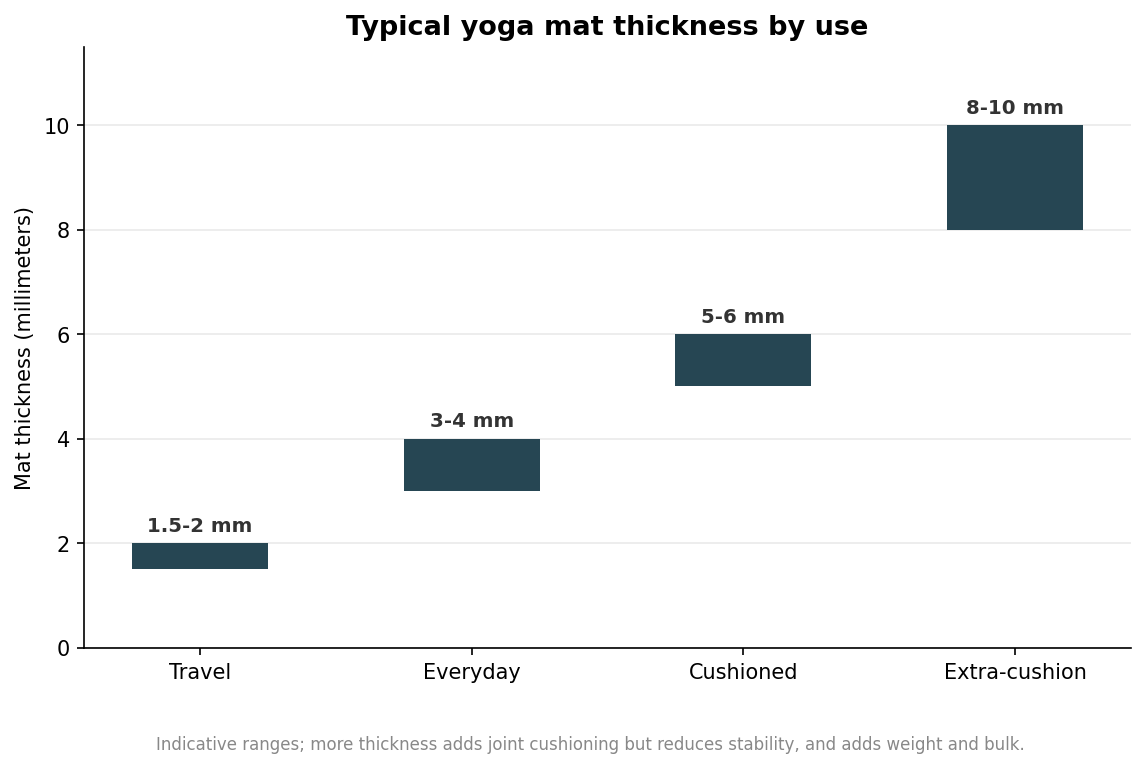
Thickness is the first spec buyers pick and the one they most often get backwards, because more is not simply better. Travel mats run about 1.5 to 2 millimeters and fold small but offer little joint protection. Everyday studio mats sit around 3 to 4 millimeters, the balance most practices want. Cushioned mats at 5 to 6 millimeters ease pressure on knees and spine, and extra-cushion options of 8 millimeters and up feel plush but trade away stability. The catch is balance. A thick, soft mat that is kind to joints in a floor sequence becomes wobbly in standing balance poses, and it weighs and packs bigger. Match the thickness to how the mat will actually be used rather than defaulting to the plushest option, and remember every added millimeter is also added weight to carry. Size interacts with this too: standard mats run about 68 by 24 inches, with longer 72-to-74-inch options for taller practitioners and extra-large mats up to around 84 inches, and a bigger footprint again means more material weight and higher cost per unit.
Confusing the print surface with the grip surface
Full-color, edge-to-edge custom mats are almost always made by dye sublimating the design into a polyester microfiber suede top, which is then bonded to a rubber base. That construction is what makes vivid all-over printing possible, but it also changes how the mat behaves. A suede microfiber top is absorbent. It grips beautifully once there is a little moisture on it, which is why it suits hot and sweaty practice, but it can feel slick when completely dry until it is lightly misted or broken in, and because it soaks up sweat it needs regular washing, usually a gentle hand or machine wash and air drying, since harsh heat can loosen the bond between the printed top and the rubber base. This is a different feel from a closed-cell PVC mat, which wipes clean in seconds but can turn slippery under sweat. Neither is wrong, but buyers who expect a printed mat to behave like their old wipe-clean PVC mat are often surprised. Decide whether the practice is dry or sweaty first, and choose the surface to match.
Under-specifying the material and over-trusting eco claims
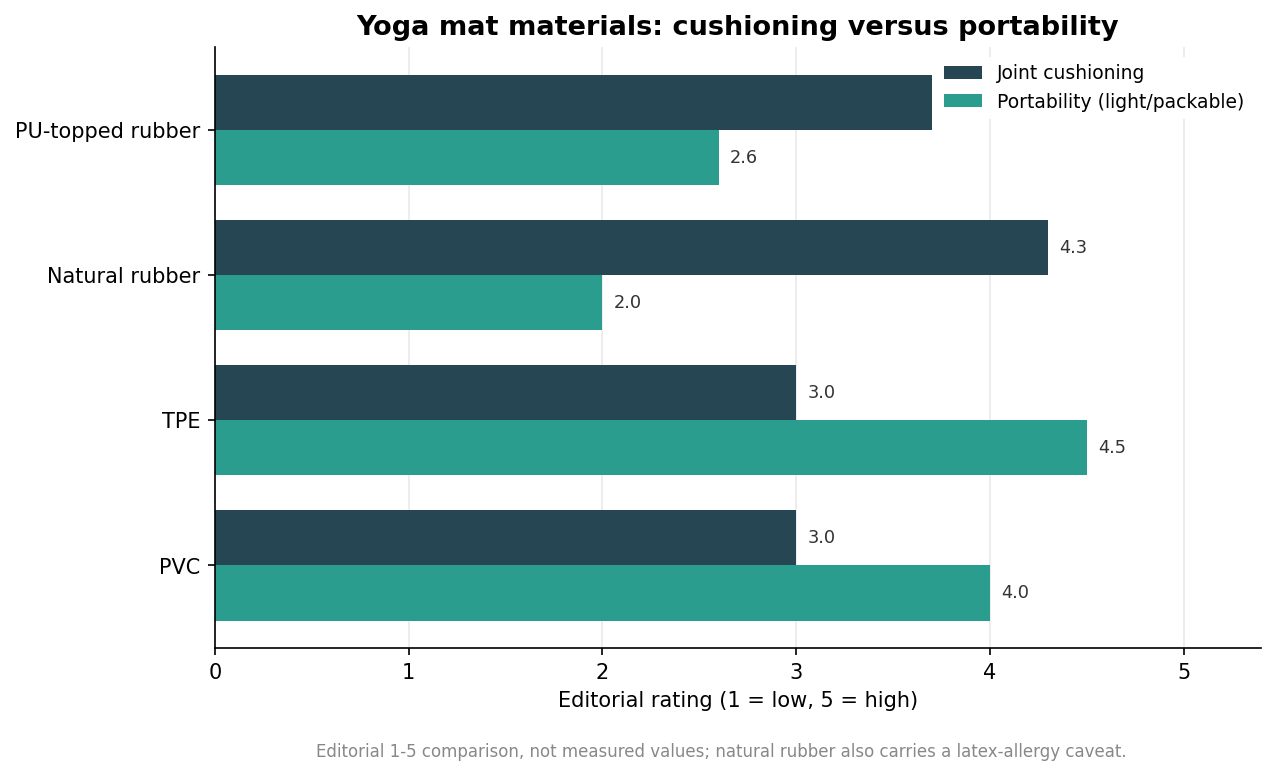
The base material sets durability, grip, weight, and environmental profile, and leaving it vague invites substitutions. PVC is durable and easy to clean but is not a natural material and, in cheap versions, can raise questions about phthalates. TPE is lighter and often marketed as more recyclable, but tends to be less hard-wearing. Natural rubber offers excellent grip and cushioning and a genuine eco story, at the cost of more weight, a noticeable initial smell, and a real latex-allergy concern worth disclosing to buyers. Polyurethane tops give outstanding wet grip and a premium feel but scuff more easily. Treat unqualified “eco,” “non-toxic,” or “natural” labels as marketing, not proof. If safety or sustainability matters to your audience, ask the supplier for specifics such as OEKO-TEX certification or documented compliance with Proposition 65 and REACH, and get it in writing rather than accepting a logo on a listing.
Sending artwork that fights the process
Sublimation onto suede is forgiving of detail but not of color assumptions. Designs built in bright screen RGB often print more muted than expected, because the dye sits in a soft textile rather than on glossy paper, so work in CMYK and, where color accuracy matters, ask for a printed proof rather than trusting the on-screen mockup. Build the file at full size with real bleed past the trim edge, since a mat trimmed with no bleed can show a thin unprinted line along the border. Use high-resolution art, because a logo that looks crisp on a phone can turn soft when stretched across a 68-inch mat. Very dark, saturated fields also show lint, wear, and footprints more readily than mid-tones, which is worth weighing for a mat that will be used hard.
Overlooking weight, minimums, and lead time
The commercial details derail more orders than the design ever does. A microfiber-and-rubber mat typically weighs somewhere around 2 to 3.5 pounds, while a solid natural rubber mat can run heavier, which matters for a mat people carry daily and for your shipping costs at volume. Minimum order quantities swing widely: print-on-demand services will make a single mat, while bulk custom manufacturing often starts around fifty to a hundred units per design and rewards larger runs with better pricing. Lead times commonly land in the two-to-four-week range for domestic printing and stretch longer for overseas bulk production, so build in slack before an event or launch date. Above all, order a single sample before committing to the full run. The sample confirms the color, the thickness, the grip, and the smell in a way no screen preview can, and it is far cheaper than discovering a problem across a pallet of finished mats. The figures here are indicative and vary by supplier; use them to ask sharper questions, not as a quote.
Leave a Reply