Custom yoga mats stay looking new with gentle, frequent cleaning, full air drying and cool, dry storage away from sunlight. Get Custom Yoga Mats offers PU, TPE, natural rubber, cork and vegan suede yoga mats, and each material needs a slightly different routine. This guide covers cleaning, disinfecting, storing and replacing branded mats so your logo stays crisp class after class.
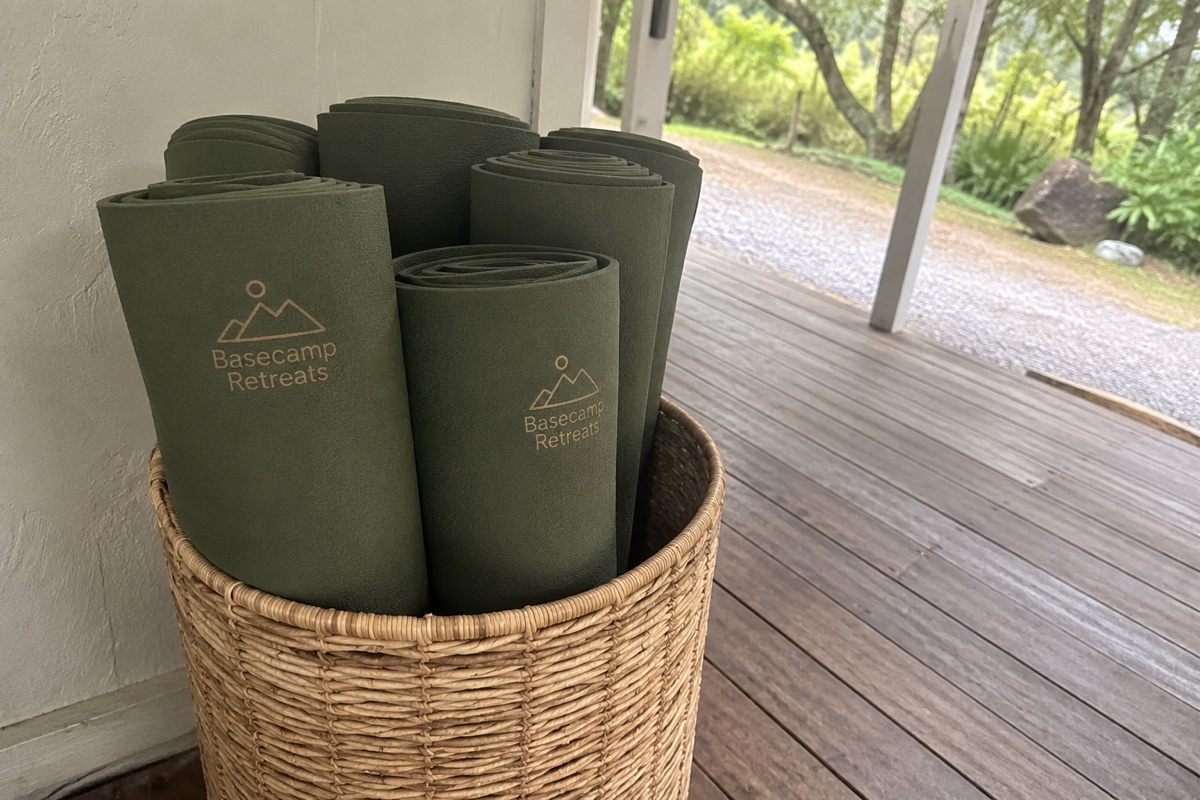
- Wipe custom yoga mats with mild soap and water, never harsh solvents
- Air dry fully before rolling or stacking
- Roll mats top side out and store away from direct sun
- Free mockup within 24 hours, minimum order of 12 yoga mats
- Standard turnaround about 2 weeks
How do you clean custom yoga mats without fading the logo?
Clean custom yoga mats with a soft cloth, mild soap diluted in plenty of water and a gentle wipe in the direction of the surface texture, then let the mat air dry flat or draped before rolling it. Harsh solvents, abrasive pads and heavy scrubbing are what wear a printed logo down, not regular care. A light routine done often protects the artwork far better than an occasional deep scrub.
The goal is to remove sweat, skin oils and floor dust before they build up on the printed area. When residue sits on a logo for weeks, people start scrubbing harder, and that is when edges of a design begin to soften. Studios that wipe class mats at the end of every session rarely see that problem.
- Wipe, do not soak: a damp cloth is enough for daily cleaning on every material.
- Test new cleaners first: try any new spray on a corner of the mat away from the logo.
- Skip the dryer and direct heat: let mats dry at room temperature, out of strong sun.
- Ask before you order: Get Custom Yoga Mats can share care guidance for the exact material on your quote.
Which yoga mat material is easiest to care for in a busy studio?
Yoga mats with a closed, smooth surface such as PU performance and TPE are usually the easiest to keep clean in a busy studio, because sweat and dust sit on top and wipe away quickly. Natural rubber, cork and vegan suede each need a slightly different routine. Matching the material to how often mats are used, and by whom, keeps maintenance realistic for your staff.
| Material | Everyday care | Watch out for |
|---|---|---|
| PU performance | Quick damp wipe after each class | Strong solvents on the top layer |
| TPE eco | Mild soap and water, air dry | Long periods in hot cars or direct sun |
| Natural rubber | Gentle wipe, dry away from light | Sunlight and oily cleaners |
| Cork | Light wipe, cork stays fresh between classes | Soaking or saturating the surface |
| Vegan suede | Damp cloth, gentle hand wash when needed | Wringing or harsh rubbing on the print |
If a studio wants rental mats that front desk staff can turn around between back-to-back classes, a smooth top is the practical pick. Retail mats that members take home can lean toward cork or suede, since each owner cares for a single mat. You can compare surfaces on the PU performance, TPE eco and cork pages.
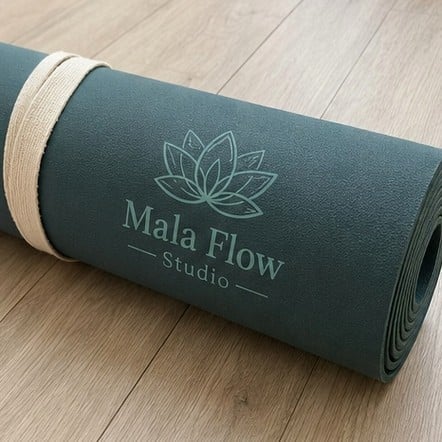
Can studios disinfect branded yoga mats between classes?
Studios can sanitize branded yoga mats between classes, as long as the cleaner is gentle enough for the mat surface and the printed or debossed logo. The safest approach is a mild, mat-friendly cleaner applied with a cloth rather than sprayed heavily onto the design, followed by time to air dry before the next class rolls the mat out.
Shared mats see the hardest use of any yoga mats, so a written routine helps. Put the cleaning steps on a card near the mat rack, keep cloths and spray bottles in one place and assign the last instructor of the day to check that every mat is dry before it is stacked or rolled. Wet mats rolled tightly together hold moisture, which leads to odor and a tacky surface.
- Wipe each mat top and underside with a lightly dampened cloth.
- Use a gentle cleaner on high-contact areas, working with light pressure over the logo.
- Leave mats open or hung until fully dry.
- Roll or stack only dry mats, logo side out for a cleaner look on the rack.
For gyms running several group classes a day, the branded yoga mats for gyms page covers the formats that suit heavy shared use.
How should you store custom yoga mats so they stay flat?
Store custom yoga mats rolled loosely with the top surface facing out, or hung on a rack, in a cool and dry room away from direct sunlight and heaters. Rolling with the top facing out helps the edges lie flat when the mat is opened, and keeping mats out of strong light protects both the material and the printed colors over time.
Curling corners are the most common complaint with new mats, and storage habits cause most of it. Mats rolled tightly with the top surface inward tend to lift at the ends, which is distracting in class and makes the logo look tired. A simple reverse roll for a few hours usually brings an edge back down.
- Rental racks: vertical cubbies or wall hooks let mats breathe between classes.
- Back stock: keep unsold retail mats in their packaging, upright, in a dry stockroom.
- Events: pack event mats loosely and unroll them on arrival so they relax before guests use them.
- Foldable mats: fold along the same lines each time, as covered in the foldable vs. standard comparison.
How long do custom yoga mats last with regular use?
Custom yoga mats last longest when the material suits the use, the mats are cleaned gently and often and they are stored out of heat and sunlight. A mat used by one owner wears very differently from a rental mat shared by many students each week, so studios plan replacement around use rather than a fixed calendar.
Watch for the practical signs that a mat is ready to retire: a surface that no longer grips, thinning in the spots where hands and feet land most, edges that will not lie flat or a top layer that starts to flake. Logo wear on its own is rarely the first sign when the mats get gentle care, because the print sits on the same surface that students use every day.
Rotating rental mats is the simplest way to extend their life. Use one set for a stretch of time, then switch to a second set so wear spreads evenly. Because Get Custom Yoga Mats keeps your approved design on file, a reorder of the same mats is straightforward when a set is ready to retire, starting from a minimum of 12 mats.
Does the decoration method change how you care for a yoga mat?
The decoration method changes care only slightly: printed yoga mats call for gentle wiping over the artwork, while debossed or laser-etched mats carry the logo in the surface itself, so care focuses on keeping the recessed design free of dust. Both methods hold up well when the cleaning routine avoids harsh chemicals and abrasive pads.
Full-color printed designs suit photos, gradients and multi-color brand marks, and they benefit most from soft cloths and mild soap. A debossed logo is pressed into the mat, so it has no ink to wear, but dust and residue can collect in the impression. A soft brush or cloth worked lightly across the logo keeps it crisp.
If easy maintenance is a top priority, mention it when you request a quote. The team can suggest a material and decoration pairing that fits how your mats will be used, and the free mockup within 24 hours shows the logo placement before you commit. Read printed vs. debossed yoga mats for a fuller comparison.
What care details should you plan before ordering custom yoga mats?
Before ordering custom yoga mats, decide who will use them, how often they will be cleaned and where they will be stored, then share that with your supplier so the material and design fit the real routine. A few minutes of planning at the quote stage prevents mats that look great on day one but are hard to keep looking that way.
- Who uses them: shared rental mats, retail mats or gifts each call for different surfaces.
- Where they live: racks, cubbies, travel bags or a guest room shelf.
- Who cleans them: front desk staff, instructors or individual owners.
- Logo placement: placing artwork away from the zones where hands and feet land most reduces visible wear.
- Care notes for buyers: retail studios often add a simple care card at the point of sale.
Get Custom Yoga Mats returns a free mockup within 24 hours, offers unlimited free revisions and asks for no payment until you approve the design. Standard turnaround is about 2 weeks, with faster turnaround available with express shipping. When you are ready, request a quote and include a line about how the mats will be cleaned and stored.
Frequently asked questions
Can I use vinegar to clean custom yoga mats?
Custom yoga mats can react differently to vinegar depending on the material, so test any homemade cleaner on a small corner away from the logo first. Natural rubber and suede tops are better served by mild soap and water. Get Custom Yoga Mats can share care guidance for the specific material you choose, which is the safest way to protect both the surface and the printed design.
Should custom yoga mats be rolled with the logo facing in or out?
Custom yoga mats are best rolled with the top surface, and therefore the logo, facing out. Rolling this way helps the edges lie flat when a student unrolls the mat, and it keeps the design from pressing against the textured underside. If a mat curls at the corners, reverse-roll it for a few hours and it usually relaxes back into shape.
Can a studio wash vegan suede yoga mats in a washing machine?
Vegan suede yoga mats are generally safer with gentle hand washing in cool water than with a machine cycle, because agitation and wringing stress both the fabric top and the print. Press water out with a towel instead of twisting, then dry the mat flat. Get Custom Yoga Mats can confirm the right care method for the suede mats on your quote.
How do I get rid of odor on shared studio yoga mats?
Shared studio yoga mats usually develop odor when they are rolled or stacked while still damp. Wipe each mat after class, leave it open or hung until fully dry and store the set in a room with good airflow. Rotating two sets of rental mats also gives each mat more time to dry and keeps the whole collection fresher.
Will sunlight fade the colors on printed yoga mats?
Printed yoga mats hold their colors best when they are kept out of strong, direct sunlight for long stretches. Window displays, sunny car seats and outdoor storage are the usual culprits for faded artwork and dried-out material. Studios with bright retail windows can rotate display mats, and anyone teaching outdoors should pack mats away in a bag between sessions.
Can cork yoga mats get wet during hot or sweaty classes?
Cork yoga mats handle sweat during class well, and many students like how the cork surface feels as it warms up. The key is not to soak cork or leave it wet afterward. Wipe it with a lightly damp cloth, let it air dry fully and store it away from heat. Get Custom Yoga Mats offers cork mats with printed or engraved branding.
How often should a studio replace its rental yoga mats?
Rental yoga mats should be replaced based on condition rather than a fixed date, since use varies widely between studios. Retire a mat when it loses grip, thins where hands and feet land, flakes on top or will not lie flat. Get Custom Yoga Mats keeps your approved design on file, so ordering a replacement set of matching mats is simple.
Do new custom yoga mats have a smell when they arrive?
New custom yoga mats, especially natural rubber mats, can have a noticeable material scent when first unpacked. Unroll the mats and let them air out in a ventilated room before the first class, and the scent typically fades with time and use. If your space is small or scent-sensitive, ask Get Custom Yoga Mats about materials with a milder smell.
Can yoga mats be stored in a car between outdoor classes?
Yoga mats should not be left in a parked car for long, because heat inside a vehicle can warp TPE and rubber and fade printed artwork. Instructors who teach in parks or on beaches should bring mats indoors at the end of the day. A foldable travel mat in a bag is easier to carry in and out than a full studio mat.
Is a printed or debossed logo easier to keep clean on a yoga mat?
A printed logo on a yoga mat is easier to wipe because the surface is flat, while a debossed logo sits in an impression that can collect dust. Both stay sharp with gentle care. Wipe printed designs with a soft cloth and mild soap, and brush debossed logos lightly. Get Custom Yoga Mats can show either option in a free mockup.
Should a retail studio include care instructions with branded yoga mats?
A retail studio selling branded yoga mats benefits from adding a short care card at checkout, because buyers who clean and store mats correctly stay happier with them. Cover gentle wiping, air drying, rolling top side out and avoiding direct sun. Get Custom Yoga Mats can advise on the right care points for the mat material you stock.
Can a hotel or retreat clean custom yoga mats between guests?
A hotel or retreat can clean custom yoga mats between guests with a gentle wipe, a mat-friendly cleaner and full air drying before the next guest arrives. Smooth-top PU or TPE mats are the quickest to turn around. Get Custom Yoga Mats can suggest a material for guest rooms or retreat spaces when you request a quote.
Get a free mockup for your yoga mats
Send your logo or idea and the quantity you have in mind. Get Custom Yoga Mats returns a free mockup within 24 hours, you approve the design before anything is produced, and standard turnaround is about two weeks with faster options available. Get a custom quote.